Posts

god grew tired of us questions.

These are questions from the movie god grew tired of us. PART ONE – Beginning to Arrival at Kenya 1. How many people lost their lives from the civil war in Sudan? 2. Who are the Lost Boys? 3. What two things started the civil war in Sudan? 4. Who was fighting in the war? 5. What hardships did the boys face on their journey to Ethiopia? 6. What happened to the refugee camp in Ethiopia? 7. How many years did the Lost Boys walk total after the attacks on the villages? 2 million people died. Orland young men/boys who walked over a thousand miles to a refugee camp in Ethiopia, where they still reside today, because Sudan is still dangerous. Oil and religion were the reasons the war started. Muslim north and the black Christian south. Some of the hardships that the boys faced were lack of food, lack of water, animals, and bombing raids from the north. The boys had to leave again and moved to Kenya.  It took the boys 5 years to get to Kenya. Part t...

Blog post #17!

What's up to the reader! My name is lane miller and this is my 17th blog post and might be my last or second to last. We got a new key question! Why do people migrate, and well we will find that out through the two learning objectives. the first one is why do people migrate? most people migrate for better job opportunities or to escape some sort of persecution, they can be split into two categories. the first is voluntary; for things like jobs/money, and involuntary; like escaping persecution or natural disaster. Then we had to talk about some migration trends. like how approximately 9%of the world's population are international migrants. and how Asia, Latin America, and Africa all have net out-migration which means more people are leaving than entering the country. And how north America, Europe, and Australia all have a net in migrations, which means that more people are coming in than out.

asia countries

Image
1. isreal 2. jordan 3.Lebanon 4.sirya 5.iraq 6.saudi arabia 7.yemen 8.georgia 9.armina 10.azerbajan 11.kuwait 12. bahrain 13.quatar 14. UAE 15. ohman 16. iran 17. Kazakhstan 18. Uzebeackestan 19. Turkmenistan 20. kergystan 21. tajickestan 22.afganistan 23. pakistan 24.russia 25. nepal 26.india 27.maldieves 28.mongolia 29.china 30.butahan 31.Bangladesh 32.myanmar 33. thailand 34.sri lanka 35.Singapore 36.laos 37. vietnam 38.cambodia 39.brunie 40.malyasia 41.Indonesia 42. north korea 43.south korea 44.taiwan 45.philpeans 46. japan 47.east timor

Data for four countries

morocco CBR-17.5 births/1,000 population CDR-4.9 deaths/1,000 population Total Population-34,314,130   Total Fertility Rate-2.09 children born/woman Calculate RNI (NIR)- CBR- CDR/10 (always expressed as a percentage)- 1.26 Place the country in the correct stage of demographic transition according to the model (Stage 1, Stage 2, Stage 3, Stage 4)- stage 3 afganistan, CBR-37.5 births/1,000 population   CDR-13.2 deaths/1,000 population Total Population-34,940,837 Total Fertility Rate- 5.02 children born/woman Calculate RNI (NIR)- CBR- CDR/10 (always expressed as a percentage)-2.43 Place the country in the correct stage of demographic transition according to the model (Stage 1, Stage 2, Stage 3, Stage 4)- stage 1 germany CBR-8.6 births/1,000 population CDR- 11.8 deaths/1,000 population Total Population-80,457,737 Total Fertility Rate-1.46 children born/woman Calculate RNI (NIR)- CBR- CDR/10 (always expressed as a percentage)- -0.32 Place the country i...
Guns, Germs, and Steel –Episode 3  Directions: Before viewing the film, read each question below so you know what information and ideas you should be looking for as you watch Episode 3. Record your answers to each question by providing as many facts, details, and examples as possible to answer each question. Be prepared to discuss your answers with the class .  1)According to Jared Diamond, what allowed Europeans to develop the power necessary to conquer (take over) large portions of the world?  The Europeans had access to more productive crops and animals because of there geography, this gave them a headstart to conquer the world. 2)Why were the Europeans who settled the South African cape(tip) so successful? Describe two reasons.  The first reason is that the climate of the cape was very similar to Europe. and that the native people were not akin to the diseases from the Europeans. 3)How did disease allow the Europeans to conquer the native popul...

guns, Germs, and Steel. ep. 2

Guns, Germs, and Steel: Episode 2 Directions: Before viewing the film, read each question below so you know what information and ideas you should be looking for as you watch Episode 2. Record your answers to each question by providing as many facts, details, and examples as possible to answer each question. 1. At the time that the Spanish conquistadores invaded the Inca Empire, they were armed with state of the art weaponry. Describe this weaponry. Some of the weapons that the Spanish had where the gun, which shot bullets but at a slow speed, steel swords, and repairs. 2. What is Jared Diamond’s explanation for why the Spanish had advanced to steel swords while Inca’s were still making tools and weapons from bronze? Because the Incas had to take lots more time to farm, so that means there were no people who had the time to learn metallurgy and create things other than bronze. 3. How did the battle tactics used by the Spanish conquistadors help the small army defeat...

Guns,Germs, and Steel

1. According to Jared Diamond, what are the three major elements that separate the world’s  “haves” from the “have nots”? The major elements are Guns, Germs, and steel. 2. Jared Diamond refers to the people of New Guinea as “among the world’s most culturally diverse and adaptable people in the world”, yet they have much less than modern Americans. Diamond has developed a theory about what has caused these huge discrepancies among different countries, and he says it boils down to geographic luck. Give several examples from the film to support Diamond’s theory. An example of geographic luck would be the Europeans being able to farm crops like wheat , while the people of papa new guinea are forced to gather sago witch is much less nutritious. Also with the animals they had, in new guinea they only had pigs witch could not be used for pelts, milk, nor could pull plows. On the other hand in Eurasiathey had a plethora of helpful animals.  3. For thousands of years, peopl...

japenses old age questions

Salutations Reader my name is Lane Miller. These are just some questions from an article that we read about Japan's aging crisis. 1.) According to the article, what are the two fundamental aspects of Japan's aging crisis? 2.) By 2030, what percentage of the Japanese population will be elderly dependents (aged 65+)?  3.) What is the direct economic impact of Japan's aging population? 4.) How is the Japanese government attempting to address labor shortages? 1. The two main aspects of the aging Crisis are the increase of the elderly in the total population, and slower population growth because of a smaller fertility rate.  2. By 2030 34% of all of japans population will be over the age of 65. 3. The direct economic impact that the aging crisis will bring is a smaller labor force. 4. The government is trying to fight the labor shortages by encouraging women to join the workforce.

Malthus questions 10/15/19

Hello, Readers, my name is Lane Miller. And this is my post on the Malthus questions. According to Malthus, what is the general nature of all animated life? According to Malthus, what is the most positive check on human population growth that has existed in history? Describe Malthus’ idea of arithmetic growth of food supply v geometric growth of the human population.  Discuss Malthus’ idea of positive and preventive checks on the human population. Provide examples of both.   RESEARCH: Was Malthus Right? Read the article and do some outside research if necessary and decide whether or not Malthus was right.   1. The general nature of all animated life is to increase beyond the nourishment provided for it. 2. According to Malthus, the most positive check is a disease. 3. Malthus's description of the arithmetic growth of the food supply is human population doubles over time I.E (1,2,4,6) while the food population only goes u...

Article 4 paragraphs

Hey, Readers, my name is Lane Miller. This is my four-paragraph essay on fertility rates and the factors that cause them in two different countries France and Nigeria. The fertility rates in Nigeria and France are caused by these 2 factors w omen’s earnings % based on men and literacy rates. First, we have France, France is a developed nation which means that they should have a smaller birth rate. This is true, in 2017 they had a birth rate of 1.9 children per woman, this is a healthy birth rate and points to France being a developed nation. In France, the Average Percentage of a women's salary to a mans is 72%. this is perfect and it is so high means that the women are more educated. Because they are more educated they make better decisions and know more about contraceptives. France also has a literacy rate of 99%, this is much higher than in other countries. this also means that women have a better chance to learn about contraceptives and to provide for themselves and their ch...

Blog post #16! (Video notes)

Video notes 1 in 5 of children would die before the age of 5 in 1950 -The 1800s 2/3 of children would die -the industrial revolution helped a lot -2000 was the peach child year -pin code of the world 1114 1 billion in the Americas, one billion in Europe, one billion in Africa, and 4 billion in Asia/Oceania -‘final pin code” 1145 same with the Americas and Europe, but 3 more billion in Africa, and 1 more billion in Asia -after finale pin code the world's population will stat to flatline -population and child b birth are directly linked with literacy rates and income levels per capita Income levels income level zero-barely Abel to afford shoes Income level one- able to afford a bike Income level 2- Abel to afford a motorbike Income level 3- Abel to afford a car Income level 4- Abel to afford air travel -two billion kids in the world

Blog Post #15!

Image
1. somalia 2.ethiopia 3.kenya 4. Madagascar 5.Tanzania 6. Mozambique 7. eswatini 8.lestoto 9. south Africa rica 10. egypt 11. sudan 12.south sudan 13. uganda 14.burundi 15.rawanda 16. zambia 17.Zimbabwe 18. libya 19.chad 20.central african Republic 21. democratic republic of the congo 22.angola 23.nambia 24.botswana 25.niger 26.nigeria 27.cameroon 28. equitorial guinene 29.  gabon 30. Republic of the congo 31.algeria 32.mali 33.burka faso 34.ghana 35.togo 36.bennin 37. moraco 38.wesern sahara (Not Techniclly a counrie) 39. marutania 40. senagal 41. the gambia 42. guiene bissau 43. sierea leon 44.liberia 45. digubuti 46. euritria 47. tunisia 48. maliwai 49.guine 50. maritius 51. Sao tome and principal 52. cout de ivory

Make Sure You Follow Me!!!

Blog post #14!

Yo-yo reader my name is Lane Miller. today in human geography we had to  Define Population, Demography, and the key demographic indicators and identify  and track certain population statistics and compare the statistics between nations. Population:  all the inhabitants of a particular town, area, or country. Demography:  the study of statistics such as births, deaths, income, or the incidence of disease, which illustrate the changing structure of human populations. Also the key demographic indicators with are;  Life expectancy at birth -  The number of years newborn children would live if subject to the mortality risks prevailing for the cross-section of population at the time of their birth,  crude death rate  - Annual number of deaths per 1,000 population,  Crude birth rate  - Annual number of births per 1,000 population,  Total fertility rate  - The number of children that would be born per woman if she were to live to the e...

Blog post #13!

Howdy-do Reader my name is lane miller. Today we got a new key question why are different places simular? Well, the new thing we just learned was cultural Diffusion. Cultural Diffusion is the prosses of an idea or object spreading to a place or population. There are 5 different kinds of diffusion. The first one is relocation diffusion - the movement of an idea based on the movement of peoples from place to place, An example of this would be the movement of the Spanish language from Spain to the Americas. The second type of diffusion is Contagious diffusion - witch is where an idea/trend toches everyone in a population and does not skip anyone. an example of this would be the widespread use of the internet. The Third type of diffusion would be hierarchical diffusion - where the diffusion is spread thro a person's power. An example of this would be the AIDS virus spreading thro the united states. The fourth type of diffusion is stimulus diffusion -  where an idea spreads based on its...

Blog post #12

Image
Wazzup reader, My name is Lane miller. today in geography we are starting a new region in our mapping the world stuff, it is Europe. Luckily I am very skilled in the map of Europe so this will be easy. 1. Russia 2. Finland 3.estonia 4. Belarus 5. Latvia 6.lithuania 7.ukrane 8.moldova 9.norway 10. Sweden 11. Denmark 12. Poland 13.cheznia 14.slovakia 15.romania 16.bulgaria 17.turkey 18. cypres 19. Germany 20. Austria 21. hungry 22.serbia 23.kolsovo 24.north Macedonia 25.grecce 26.slovenia 27.croatia 28.boznia and hegerzovina 29. Montenegro 30. Albania 31.iceland 32.netherlands 33.belgium 34.switzerland 35.san marino 36.italy 37.vatican city 38. malta 39.ireland 40.United kingdom 41. luexemburg 42.lichtenshtine 43.france 44.mancao 45.andora 46.portugal 47.spain

Blog Post #11!

What's up reader, My name is Lane Miller. And we got a new key topic in human geography it was why are different places simular.  We will find that by defining globalization,    Identifying and describing the facilitators of globalization, and to understand or connect to the global process. Well to start it off, what is globalization, globalization-   is the process of interaction and integration among people, companies, and governments worldwide.  An example of a facilitator of globalization would be the airplane, the airplane is a facilitator of globalization because it increased the speed at which humans could travel from one place to another. thus spreading cultures faster. my personal connection to the global prosses would be me using my media and spreading it to other people. 

Blog Post #10!

Hi-Ya Reader, my name is Lane Miller. And this is my Human Geography blog post. Today in class we got a new topic, Regions, and we had to define the four different types of regions and compare and contrast them. First, we have a  formal region- an area designated by official boundaries, next is functional region- this is a place and the surrounding places affected by it, then we have vernacular region-  a distinctive area where the inhabitants collectively consider themselves interconnected by a shared history, then finally we have just a normal region-  an area or division, especially part of a country or the world having definable characteristics but not always fixed boundaries. Now to compare an example of a formal region would be something like Maryland, while a functional region would be Baltimore, and then finally a vernacular region would be the mid-Atlantic states. a vernacular region does not technically have actual borders but could have a similar history to the...

Blog post #9!

Bonjour Reader, My name is Lane miller. Today we have a new key question,  "Why is each point on the earth unique?". Well, geographers use 3 different ways to describe the uniqueness of a place. They are is toponym, which is the name of the place. Like Bel-Air or Baltimore, but what if the place has the same name. If so geographers also use the "site" to show its uniqueness, this is like saying Baltimore has the harbor or Bel-Air has a rocks state park. And if that is still the same then they use the Situation. The situation is Environmental/relative. Like the Air quality, or how it looks like another place. We also had to define two terms place,  a particular position or point in space. and location,  a particular place or position.   We also had the  five themes of Geography are Location, Place, Human-Environment Interaction, Movement, and Region. Alright, time for our challenge. we had to answer some questions about a few maps. 1. Well, the best chara...

Human geo. Blog #8!

Image
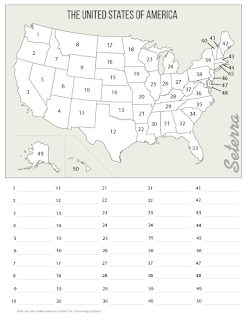
Good day Reader, my name is Lane Miller. Today in human geography we got a new topic of mapping the world. We are doing the United States, all 50 of em, and well here are a list of them. 1. Washington 2. Oregon 3. California 4.arizona 5. Nevada 6. Utah 7. Idaho 8.montana 9.wyoming 10.colorado 11. new Mexico 12.texas 13.oklahoma 14.kansas 15.nebraska 16.south Dakota 17. north Dakota 18. Minnesota 19. Iowa 20. missurio 21.arkansas 22.louisiana 23.wisconsion 24.mishagain 25.illinois 26.indiana 27.ohio 28.kentuky 29.tennese 30.missisipi 31.alabama 32.georgia 33.florida 34.south Carolina 35.north Carolina 36.virgina 37.west Virginia 38. Pennsylvania 39.new york 40. Vermont 41.new Hampshire 42.maine 43.massachesets 44. Rhode island 45. Connecticut 46.new jersey 47.delewhere 48.maryland 49.hawie 50.alaska